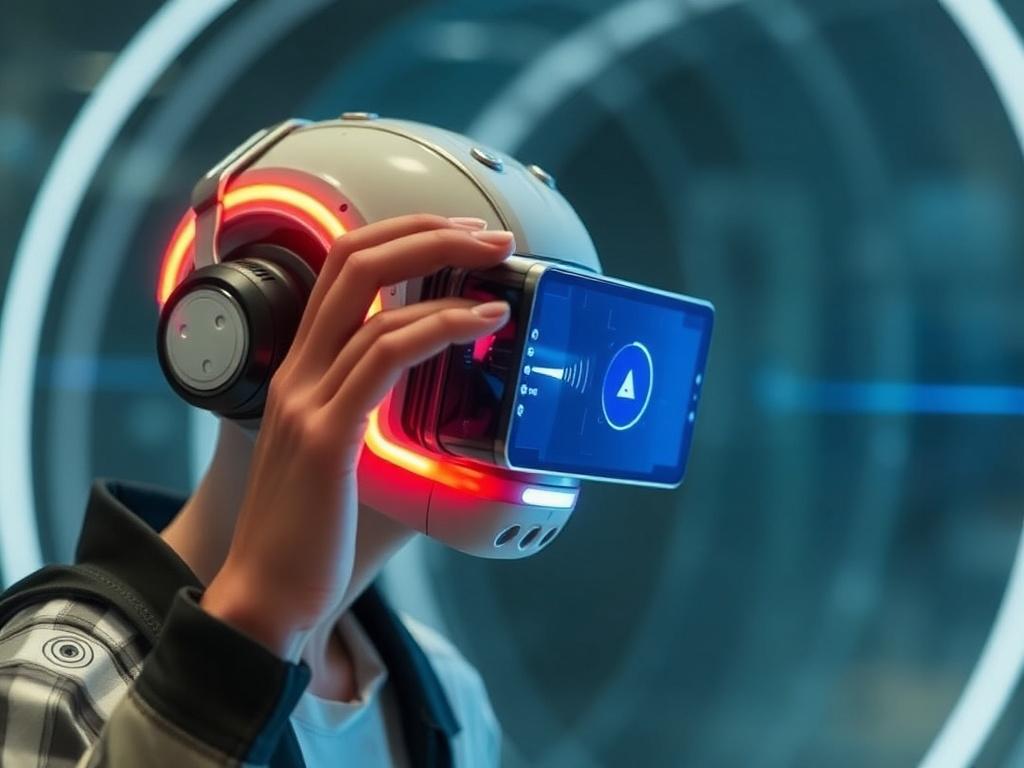
Something that once lived only in novels and movies is edging into daily life. These technologies rewrite expectations about what machines, molecules, and minds can do. I’ll walk through seven striking examples, explaining how close they are to reality and why they matter. Expect surprises, real-world milestones, and a few personal impressions.
at a glance: the seven breakthroughs
Before we dive deeper, here’s a quick map of the technologies you’ll meet. The short table below highlights what makes each one feel like it came from a futuristic story. Skim it, then read on for concrete details, caveats, and real-world signs of progress. Knowing the landscape helps the specifics land with more impact.
| Technology | Why it feels like science fiction |
|---|---|
| Neural interfaces | Direct brain–computer links that bypass speech and typing |
| Quantum computing | Solving problems classical computers cannot handle efficiently |
| Gene editing (CRISPR and beyond) | Rewriting DNA to cure or enhance living things |
| Augmented reality and spatial computing | Seamless digital layers over the physical world |
| 3D-bioprinted organs | Printing living tissue as medical implants |
| AI-driven molecular design | Machines inventing new proteins and medicines |
| Commercial fusion energy | Nearly limitless, low-carbon power from fusing atoms |
That table is a snapshot, not a promise; timelines vary and challenges remain. Each of these fields mixes bold engineering with deep scientific questions. In the coming sections I’ll unpack what’s credible now and what still reads like speculation. You’ll also see how regulation, ethics, and economics shape adoption.
neural interfaces: typing with your thoughts
Brain‑computer interfaces are no longer just lab demos or movie props. Companies and research labs have shown people controlling cursors, prosthetic limbs, and even typing sentences using neural signals. Some invasive devices already restore basic communication for paralyzed patients, which feels astonishing when you consider the former barriers.
I tried a noninvasive headset at a demo and felt a small but clear sense of agency when the cursor moved. The technology still struggles with accuracy, signal noise, and long-term implantation risks. Yet the trajectory is unmistakable: improved electrodes, better decoding algorithms, and clinical trials are accelerating real-world uses.
quantum computing: harnessing strange physics
Quantum computers tap superposition and entanglement to explore many possibilities simultaneously. That capability could revolutionize cryptography, materials design, and complex optimization problems that classical machines struggle with. Companies report growing qubit counts and error‑correction progress, moving from noisy prototypes toward more stable systems.
Practical, general-purpose quantum advantage remains limited for now, but niche wins are emerging. Simulating certain molecular interactions and optimization tasks has shown early promise, hinting at industry uptake in the next decade. Researchers still face coherence, scaling, and software challenges before quantum machines become routine tools.
gene editing: rewriting life’s code
CRISPR and newer methods like base and prime editing let scientists change DNA with unprecedented precision. Therapies using these tools have cured inherited blood disorders in clinical trials, turning genetic medicine from theory into patient outcomes. That movement from bench to bedside is what makes gene editing feel like science fiction becoming ordinary healthcare.
Ethical and safety concerns remain central, especially for germline edits that would pass changes to future generations. Regulatory frameworks are evolving unevenly around the world, which affects research pace and public trust. Nevertheless, targeted somatic treatments are already changing lives and expanding rapidly.
augmented reality and spatial computing: digital layers on real life
Mixed reality headsets and spatial computing platforms are blending digital content into physical spaces with growing fidelity. The feeling of a hologram sitting on your coffee table is less uncanny now and more practical, with tools for design, collaboration, and navigation. Companies are shrinking hardware and improving hand tracking, making interactions smoother and less obtrusive.
I spent an afternoon testing a spatial‑computing app for remote collaboration and found gestures felt intuitive almost instantly. Still, adoption hinges on battery life, comfort, social norms, and compelling apps. When those pieces click, AR could change how we work, learn, and interact with the built environment.
3D bioprinting: printing tissues and organs
Bioprinters deposit living cells and scaffolds layer by layer to create tissue-like structures. Researchers have printed skin, cartilage, and small vascularized tissues, and clinical trials for simple grafts are underway. Printing fully functional human organs remains the holy grail, but progress in vascularization and cell differentiation is promising.
The challenges are biological as much as mechanical—replicating the complexity of organ microenvironments is hard. Still, reducing transplant waitlists and testing drugs on printed tissues are near-term applications. That practical impact is already reshaping medical research and offering hope to patients.
AI-driven molecular design: machines inventing biology
Machine learning models now predict protein structures and propose novel molecules far faster than previous methods. Breakthroughs like accurate protein folding prediction and generative design accelerate drug discovery and enzyme engineering. This capability compresses years of lab work into weeks of computation in many cases.
Real-world success stories include new therapeutic candidates and industrial enzymes optimized for specific tasks. The coupling of computational design with automated labs creates a feedback loop that speeds iteration. Governance and safety matter here, because designing biology at scale carries both huge benefits and risks.
commercial fusion: chasing the power of the stars
Fusion research has long been a promise on the horizon, but recent milestones suggest that horizon is drawing closer. Experiments have reached higher energy outputs and longer pulses, and several startups and public projects are pursuing compact, engineering‑focused approaches. If commercial fusion arrives, it could transform energy systems with abundant low‑carbon power.
Hurdles include materials that withstand extreme conditions, consistent net energy gain, and cost‑effective deployment. Even so, the momentum of investment and engineering talent gives fusion a different feel than the slow, purely academic iterations of decades past. A practical fusion plant would be the kind of technological shift that rewrites infrastructure planning.
what this means for the near future
These seven examples are at different maturity stages, but all share a common pattern: rapid scientific advances paired with intensive engineering work. Expect incremental wins first—specific therapies, niche quantum applications, useful AR enterprise tools—rather than instant, sweeping transformations. That steady accumulation of capability is what turns imagined futures into lived realities.
As these technologies spread, society will face hard choices about access, regulation, and responsibility. Paying attention now—demanding transparent trials, equitable rollout, and sensible oversight—shapes whether these tools empower many or concentrate benefits for a few. The stories we thought were fiction are arriving, and how we integrate them will decide whether they become a better chapter for everyone.