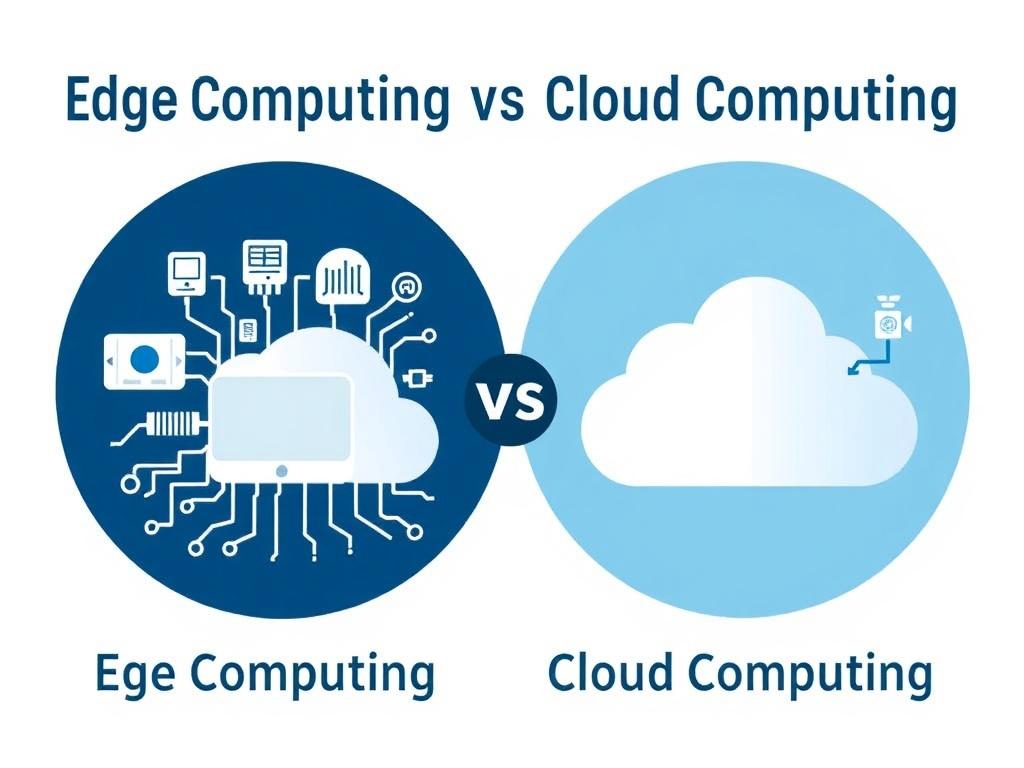
As technology advances, edge computing and cloud computing have become two influential models shaping today’s digital environment. Although both handle data processing and management, they take notably different approaches and serve different purposes. This in-depth comparison examines how edge and cloud computing diverge, the benefits each provides, and the contexts where one outperforms the other.
Understanding Edge Computing
Decentralized Processing
Edge computing moves data processing closer to where data is generated instead of depending entirely on remote cloud servers. This distributed model places compute and storage resources near the network’s edge, cutting latency and improving real-time performance. Using edge hardware like IoT sensors, gateways, and edge servers, organizations can process and respond to data on-site without sending everything to distant data centers.
Key Characteristics
Major traits of edge computing include low latency, reduced bandwidth use, and the capacity to function when connectivity is limited or intermittent. These features suit it to use cases that demand immediate decisions—industrial control systems, self-driving vehicles, and remote surveillance among them. Edge architectures also lower reliance on central infrastructure, boosting robustness and reducing the effects of network disruptions or delays.
Exploring Cloud Computing
Centralized Infrastructure
Cloud computing, by contrast, is built around centralizing computing resources and delivering them over the internet. Businesses tap into cloud offerings—such as IaaS, PaaS, and SaaS—to obtain scalable compute power, storage, and applications on demand. Cloud vendors host these services in data centers and provide global accessibility, scalability, and dependable operation.
Scalability and Flexibility
The cloud excels at scalability and flexibility, enabling organizations to adjust resources to match demand, pay based on usage, and deploy applications quickly without major infrastructure investment. Additionally, cloud platforms facilitate collaboration, sharing of data, and remote access, supporting contemporary work styles and accelerating digital transformation across sectors.
Comparative Analysis
Performance and Latency
Edge computing is ideal for situations where minimal latency and immediate responsiveness are critical. By handling data at the network’s edge, it shortens transmission times and speeds decision-making, improving end-user experiences. Conversely, cloud solutions can incur additional latency because data must travel to and from remote data centers, making them less appropriate for time-sensitive tasks.
Reliability and Resilience
With computation and storage distributed nearer to data sources, edge computing inherently increases resilience and reduces dependence on centralized systems, lessening the consequences of network outages. Cloud platforms, on the other hand, often deliver strong reliability through geographically redundant data centers, failover strategies, and extensive network infrastructure.
Cost Considerations
By filtering and processing data locally before sending it to the cloud, edge computing can lower bandwidth usage and the associated costs. This cuts the amount of data transmitted over networks. Still, implementing and operating edge hardware can require initial capital investment and ongoing operational spending, whereas cloud services usually use a pay-as-you-go model that provides predictable and scalable pricing.
Conclusion
To summarize, edge and cloud computing are distinct paradigms with their own strengths and ideal applications. Edge computing provides low latency, robustness, and bandwidth savings for scenarios focused on the network edge, while cloud computing delivers scalability, dependability, and broad accessibility for diverse workloads. The right choice depends on each use case’s needs, priorities, and constraints; many organizations adopt hybrid strategies to combine both models’ advantages. By weighing the trade-offs and benefits of edge versus cloud, organizations can choose the best approach to foster innovation and meet their goals in an increasingly connected, data-driven world.